Renewable Energy in Germany

Buying or building a factory in Germany
January 6, 2026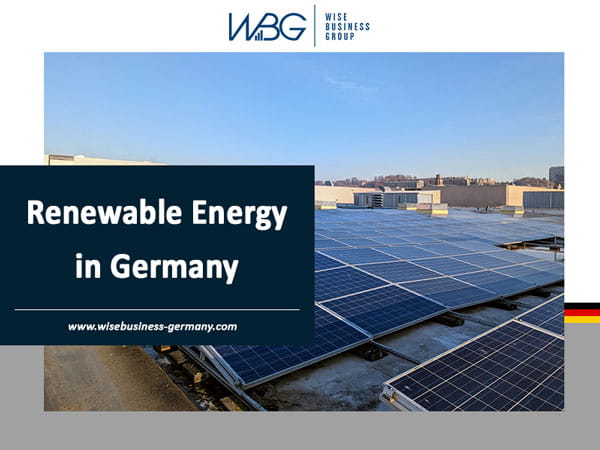
A Practical Guide to Investing in Renewable Energy and Solar Power in Germany
Profitability, Feasibility, and Residence Permit Opportunities under §21 AufenthG
In this article from Wise Business Group (WBG), you will find a realistic, practical, and Germany-specific analysis of the both profitability and feasibility of investing in renewable energy, with a particular focus on solar power.
At the end, we will clearly examine whether such an investment can support obtaining a German residence permit under §21 of the German Residence Act (AufenthG).
For more information, read this article first: Investment in Germany
Why Is Investing in Solar Energy in Germany Attractive?
What are the advantages of solar investment in Germany?
A large and continuously growing market
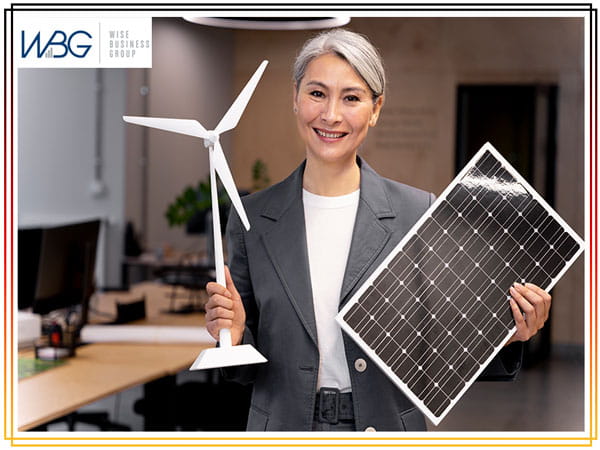
Germany is considered one of the largest and most stable solar energy markets in the world. The German government has made both a long-term and official commitment to increasing the share of renewable energy in the national energy mix. This commitment also creates a clear development outlook for solar projects and provides a high level of investment security.
Transparent and predictable legal framework
Feed-in tariffs under the Renewable Energy Act (EEG), direct electricity marketing models, and long-term power purchase agreements (PPAs) are governed by clear, transparent, and predictable regulations. This significantly reduces both legal and economic risks and enables reliable long-term financial planning for investors.
Diverse revenue models
Solar investment in Germany is not only limited to selling electricity to the grid but also common revenue structures include:
- On-site self-consumption (Eigenverbrauch)
- Sale of surplus electricity to the grid
- Direct power purchase agreements (PPA)
- Combination with battery storage systems
Access to bank and public financing
German banks and public support programs such as KfW generally take a positive view of solar energy projects. In many cases, these projects are classified as sustainable, low-risk, and bankable investments, which significantly improves financing opportunities.
What are the risks and disadvantages of solar projects in Germany?
Strong dependency on execution quality
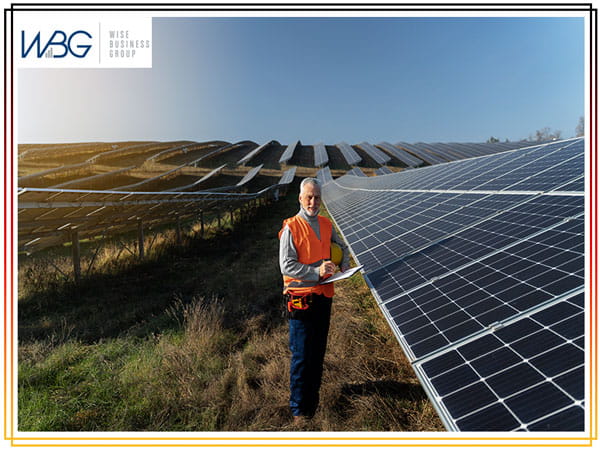
The profitability of solar projects in Germany depends heavily on execution details. Delays in grid connection, for example, can substantially impact the payback period and, in some cases, eliminate profitability altogether.
Gradual reduction of guaranteed feed-in tariffs
Feed-in tariffs tend to decrease over time in Germany. As a result, projects without efficient self-consumption or optimized sales structures may generate limited economic returns.
Administrative complexity and permitting requirements
Bureaucratic procedures and permitting processes, particularly for ground-mounted solar plants (Freifläche) in Germany, can be complex and time-consuming, requiring careful legal and technical planning.
Technical and contractual risks
Key factors such as the quality of the EPC contractor, inverter reliability, adequate insurance coverage, and professional operation and maintenance (O&M) directly affect the long-term performance and financial stability of the project.
Know more about our services: Finance and investment Consultancy
Common Renewable Energy Investment Models and their Indicative Returns in Germany
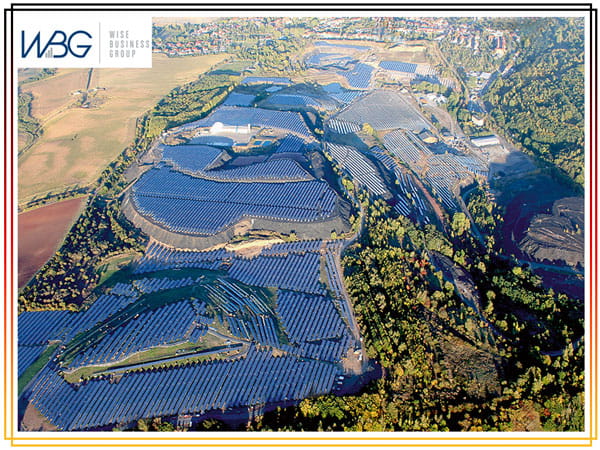
A) Commercial rooftop solar systems (the best entry point)
Why is this model attractive?
Electricity generated by rooftop systems is consumed directly on-site, significantly reducing the purchase of expensive grid electricity. So, this makes rooftop solar one of the most stable and low-risk entry models in the German solar market.
Indicative returns
- Internal Rate of Return (IRR) typically ranges between 7% and 12%
- Higher self-consumption leads directly to higher profitability
Required initial capital
- Small rooftop projects: approximately €30,000 – €80,000
- Medium to large commercial projects: approximately €100,000 – €500,000
This model is particularly suitable for investors seeking stable returns, controlled risk, and strong immigration defensibility under §21.
B) Ground-mounted solar power plants in Germany (large-scale, but professional)
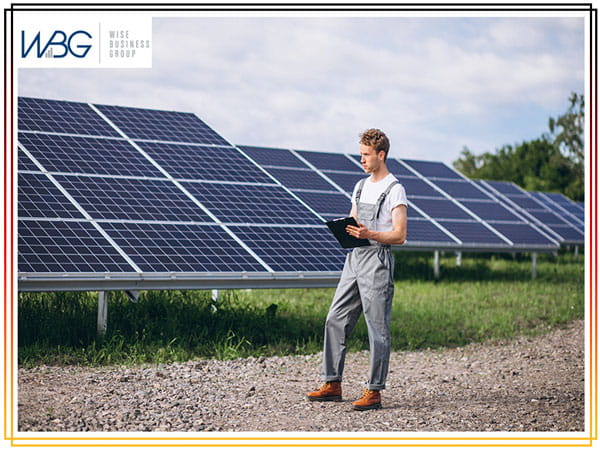
Key characteristics
- Requires suitable land, multiple permits, grid connection approval, and often participation in official electricity auctions
- Highly competitive market with lower margins compared to rooftop systems, but stronger long-term stability
Indicative returns
- IRR typically in the range of 5% to 9% for professional investors
Required initial capital
- Starting from approximately €500,000, increasing to several million euros depending on project size
- Commonly structured via project-specific companies (SPVs), joint ventures, or bank financing
C) Solar systems combined with battery storage in Germany
- Increased self-consumption
Battery storage enables maximum utilization of generated electricity and also reduces dependence on lower-priced grid feed-in. - Improved peak load management
Energy can be stored during off-peak hours and used during peak demand periods, optimizing energy costs. - Higher complexity, but significant upside potential
Although technically and economically more complex, this model can create substantial added value in projects with high internal consumption or volatile electricity prices.
Read more: Profitable businesses in Germany
Investing in renewable energy and solar power in Germany
How Much Capital Is Needed to Get Started?
A realistic overview:
| Investment Level | Project Type |
| €25k – €100k | One or two small rooftop projects |
| €100k – €800k | Portfolio of commercial rooftop systems |
| €+1M | Ground-mounted plants or large portfolios |
However, for §21 residence purposes, the investment amount alone is not decisive. The key question is:
Are you actively managing the business in Germany, or are you merely a passive investor?
Residence permit by investing in renewable energy in Germany
Can a Non-EU Investor Obtain a §21 Residence Permit Through This Investment?
Short answer: Yes, but not through passive investment.
Key §21 criteria assessed by immigration authorities in Germany:
- Economic interest for Germany
- Positive impact on the regional economy
- Transparent and secured financing
- Genuine managerial and operational role of the applicant
Strong scenarios for residence approval in Germany
- Establishment of a German company (typically a GmbH)
- Active role as Managing Director (Geschäftsführer)
- Real operational activities, such as:
- Development of solar projects
- Contracts with buildings or landowners
- Management of EPC, O&M, and electricity sales
- Clear financial and operational planning
- Use of German service providers and workforce
Weak scenarios from the perspective of §21 (often rejected)
- Mere purchase of shares or financial participation in a solar plant in Germany
- Lack of real managerial presence in Germany
- Absence of a concrete operational plan, job creation, or measurable economic impact
In summary, any scenario that reduces the applicant role to a passive investor without operational substance usually has a low chance of success under §21.
Recommended Business Plan Structure (Suitable for Immigration Authorities)
If residence is your goal of investing in renewable energy and solar power in Germany, the business plan should include:
- Business model (either commercial rooftop or project development)
- Target region (e.g. NRW)
- Project acquisition strategy
- Financial analysis per project
- Financing structure
- Job creation plan
- Your personal managerial role
- Execution timeline
In short:
- Solar energy in Germany can be highly profitable, especially in commercial rooftop models with strong self-consumption
- Ground-mounted plants require higher capital and professional expertise
- All in all, for a §21 residence permit, you must be active, managerial, and operational, not merely an investor
- This sector is one of the few that offers both solid economic returns and strong immigration defensibility
We hope this article was helpful.
For further information on starting a business or obtaining residence in Germany, you are welcome to contact us directly via the WhatsApp link below.