
Wise Business Group
September 22, 2026
Managing Director Salary in Germany: The €20,000 Mistake Many Foreign-Owned GmbHs Miss A payroll classification mistake involving your Managing Director (Geschäftsführer) can cost a German GmbH […]
August 2, 2026

Entering the German market doesn't necessarily mean starting from scratch or facing overwhelming complexities. In summary, five distinct sectors stand out as realistic, documented business acquisition pathways for foreign investors in Germany:
• Retail and E-commerce
• Consulting and Service Provision
• Hospitality, Restaurants, and Hotels
• Franchise Businesses
• German Mittelstand Companies with Succession Transfer Approach
However, the belief that you must find a "perfect" business is fundamentally flawed. You need to find a suitable structure thoroughly backed by accurate valuation and comprehensive due diligence. Only then can you safeguard your capital from day one. Proper guidance along this path helps transform the business acquisition process into a clear, strategic decision rather than a leap into the unknown. Regardless of your prior experience in the German market, each of these five sectors offers an accessible entry point.
July 6, 2026
Starting a Business in Germany at a glance
1. Residency in Germany is not required to start a business or register a company. A suitable visa or residence permit is only necessary to manage the business from Germany.
2. Choosing a legal structure, registering the business, opening a bank account, obtaining permits, registering for taxes, and receiving professional advice are the initial steps to setting up a business in Germany.
3. The most common legal forms for registering a company in Germany include sole proprietorship, limited liability company (GmbH), entrepreneurial company (UG), and partnerships.
4. Mastering basic German language skills is highly effective when doing business in Germany. If you are not fluent, be sure to seek help from a translator or a bilingual advisor.
5. The startup cost varies depending on the type and structure of your business. Allocate funds for business registration, notary services, initial capital, ongoing expenses, and advisory fees.
6. The most prominent industries for investment by foreign entrepreneurs in Germany are technology, renewable energy, healthcare, manufacturing, and e-commerce.
7. Self-employment, freelancer, and investor visas are the most common types of visas for foreign entrepreneurs.
8. Businesses are required to pay various types of taxes, which typically include corporate income tax, trade tax, VAT, and income tax.
9. The time required to register and launch a business in Germany varies. It can range from one week to a month or even longer.
10. Preparing a strong business plan, complying with regulations, proper budgeting, market research, and seeking expert assistance can guarantee your success in starting and running a business in Germany.
June 19, 2026
Consider these four categories of costs together:
• Legal and official translation costs
• Mandatory membership in the Chamber of Commerce or Crafts
• Monthly collaboration with a tax advisor
• The company's share capital, along with banking and insurance costs
By considering these costs, you can get a more realistic picture of what is required to register a company in Germany. Most entrepreneurs who come to Germany from outside the EU to start a business initially focus only on the amount advertised for the "official company registration." As a result, they overlook the total costs that can be added to this amount along the path. This lack of awareness can have the following consequences:
• A sudden halt to the project midway through
• Unexpected financial pressure that robs you of the peace of mind and focus needed to launch a new business.
However, the good news is that almost all of these costs are predictable. You only need to start with an accurate and realistic picture of German laws and regulations from the very beginning.
April 23, 2026
Business acquisition in Germany: A Choice for Sustainable Development
Buying a business in Germany is a path to bridge the security of the past with the innovation of the future. This strategy replaces the paralyzing risks of starting a business from scratch with the stability of a time-tested structure. For a savvy investor, business acquisition is not merely a commercial transaction; it is the most reliable bridge ensuring entry into the beating heart of Europe's economy and the building of a bright future on German soil.
February 7, 2026
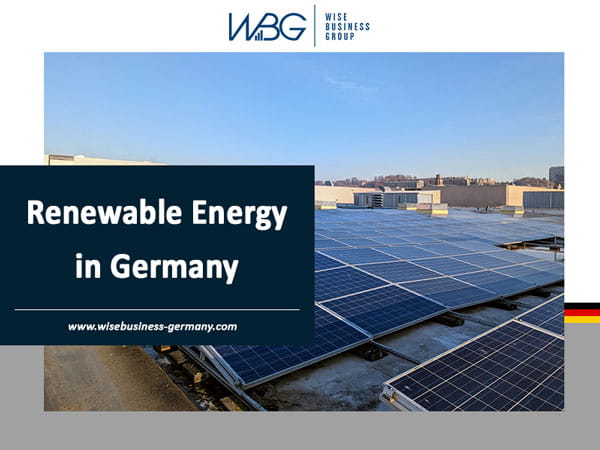
• Solar energy in Germany can be highly profitable, especially in commercial rooftop models with strong self-consumption
• Ground-mounted plants require higher capital and professional expertise
• For a §21 residence permit, you must be active, managerial, and operational, not merely an investor
• This sector is one of the few that offers both solid economic returns and strong immigration defensibility
January 6, 2026
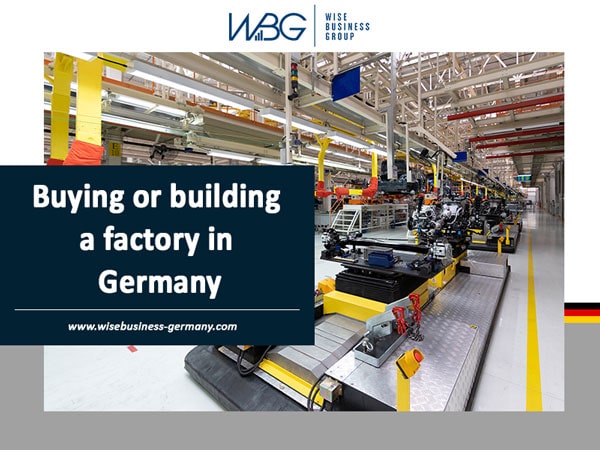
🏭 From dream to reality: How to build or buy a factory in Germany?
Germany is not only the largest economy in Europe, but also the beating heart of world industry and manufacturing.
For many entrepreneurs, owning a factory is an old dream. The good news is that Germany is one of the most transparent, structured, and secure countries for making this dream a reality.
But the key question is always:
🔹Should we build the factory from scratch?
🔹Or should we buy an active manufacturing unit?
In this article, we share a step-by-step, actionable roadmap with you.
December 14, 2025
If you have decided to register a company in Germany, congratulations! However, you should familiarize yourself with the "three minefields of legal, tax, and administrative" on the path to company registration and residency in Germany before signing any document. Not being aware of these points can turn your profits into heavy fines. In this article from Wise Business Group, we will show you how to overcome the hidden fears of registering a company in Germany and start your business with open eyes in the heart of Europe.
December 8, 2025

Germany remains the strongest and safest economy in Europe. Political stability, transparent laws, government support, and access to the 450 million EU market have made the country a desirable destination for foreign investors. In this article from Wise Business Group, we highlight some attractive investment opportunities in Germany.
